How Provincial Rules Shape Live Dealer Jackpot Mechanics in Mobile Casino Apps
Otto Hayes · Sep 22, 2026
How Provincial Rules Shape Live Dealer Jackpot Mechanics in Mobile Casino Apps
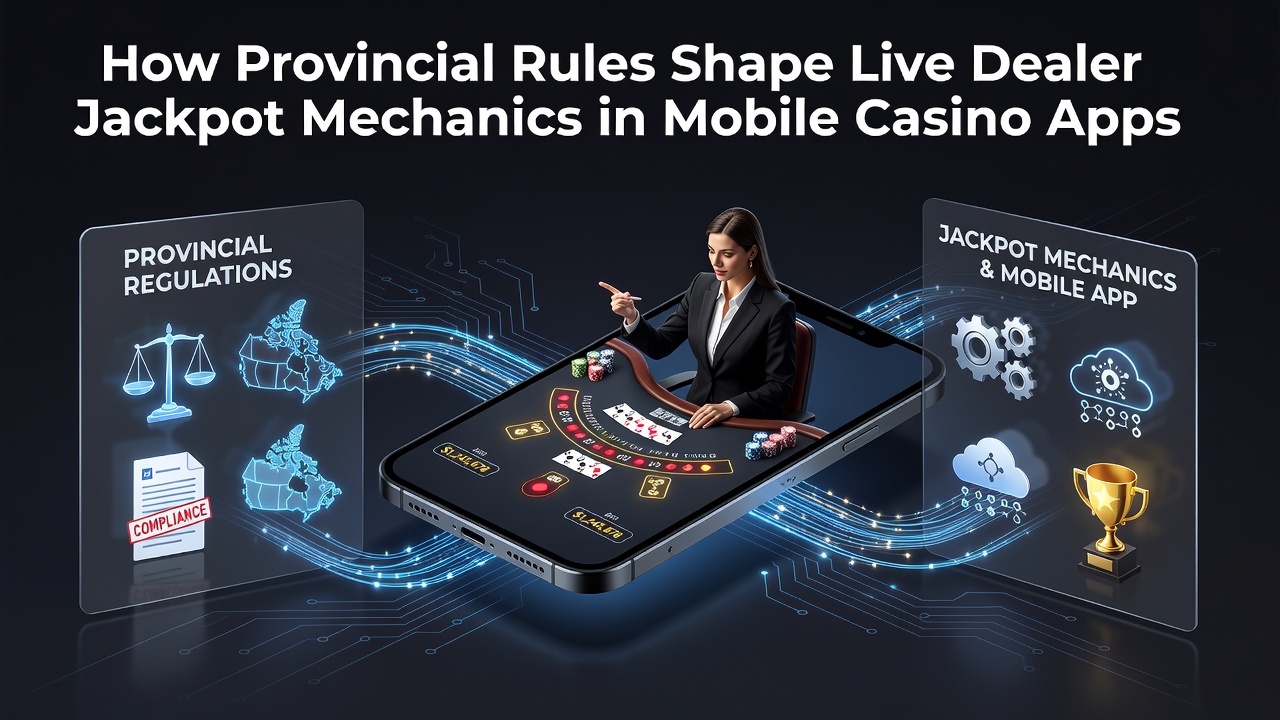
Provincial licensing frameworks across Canada determine how live dealer jackpot mechanics operate within mobile casino applications, and each jurisdiction sets distinct requirements for random number generator certification, jackpot pooling structures, and player eligibility verification. Ontario's iGaming regime, administered through the Alcohol and Gaming Commission of Ontario, requires operators to maintain separate jackpot funds for provincially licensed platforms, while British Columbia and Quebec impose additional constraints on cross-border prize accumulation that directly affect how progressive jackpots increment during live dealer sessions. These differences create distinct mechanical pathways for jackpot triggers, payout frequencies, and contribution rates that mobile developers must embed into app architecture before launch.
Regulatory Variations Across Provinces
Data from regulatory filings shows that Ontario mandates real-time auditing of live dealer streams to confirm jackpot contributions align with game rules, whereas Saskatchewan and Manitoba focus more on geofencing enforcement that limits participation to residents within provincial borders. Such rules force app developers to program location-aware jackpot engines that pause or redirect contributions when users cross jurisdictional lines. Experts note that these technical adjustments often result in segmented jackpot pools, where a single live dealer table might feed multiple independent prize meters depending on the player's registered province.
Research indicates that live dealer games using physical card shufflers and roulette wheels must integrate certified random number generators for any supplemental jackpot features, and provincial bodies require third-party testing labs to validate these systems prior to approval. In September 2026 several provinces plan synchronized updates to their technical standards documents that will require enhanced encryption for jackpot seed values transmitted between mobile clients and central servers. Operators who fail to meet these revised specifications risk suspension of their live dealer offerings until compliance is demonstrated through re-audits.
Impact on Jackpot Calculation and Trigger Mechanisms
Provincial rules dictate the precise percentage of each wager that feeds into progressive jackpots, and mobile apps must display contribution rates transparently to satisfy disclosure mandates. One documented case involved an operator adjusting its live blackjack jackpot increment rate from 1.2 percent to 0.8 percent after Quebec regulators required alignment with land-based contribution caps. Such adjustments alter the mathematical progression of prize pools, which in turn changes the expected frequency of jackpot hits during extended live dealer sessions. Mobile platforms therefore embed dynamic calculation modules that reference the player's provincial license at login and apply the corresponding contribution formula throughout each game round.
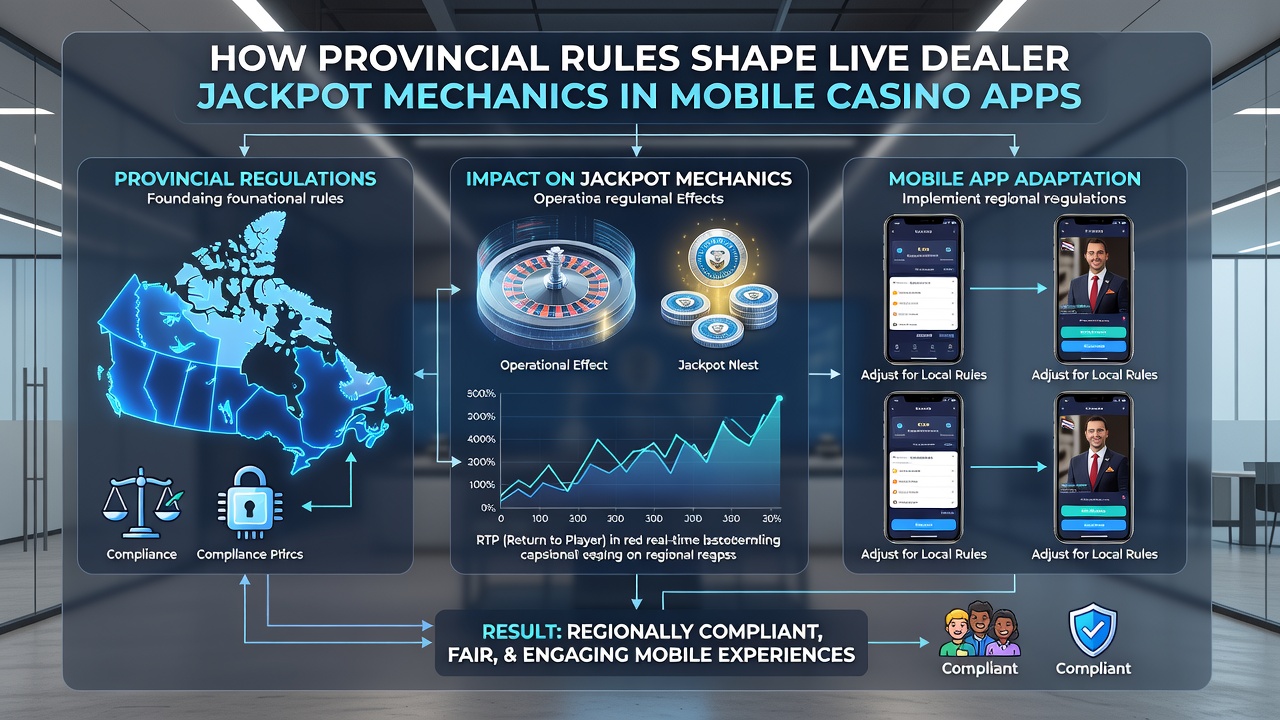
Figures from industry reports reveal that provinces requiring minimum reserve funds for jackpot liabilities compel operators to maintain higher seed values before progressive meters begin incrementing. This requirement influences app design because developers must program fallback seed amounts that activate automatically when a jackpot is awarded, ensuring continuity of live dealer tables without regulatory interruption. Observers note that these reserve thresholds also affect marketing claims about maximum possible wins, since advertised top prizes cannot exceed verified reserve levels at any given time.
Technical Compliance and App Architecture
Mobile casino applications serving multiple provinces must incorporate modular jackpot engines capable of switching between regulatory profiles without requiring separate app versions. According to technical standards published by iGaming Ontario, all jackpot-related data packets transmitted during live dealer play require timestamp verification and cryptographic signing to prevent tampering. Developers therefore integrate these security layers directly into the real-time communication protocols that connect mobile clients to dealer studios. Similar provisions appear in British Columbia's online gaming regulations, which emphasize audit trail retention for every jackpot contribution event.
Those who've examined compliance documentation observe that player-facing jackpot displays must update at intervals specified by each province, often ranging from one to five seconds depending on connection stability. When a mobile device detects a weak signal, the app must freeze the displayed meter and prevent further contributions until connectivity resumes, thereby avoiding disputes over missed increments. Such safeguards stem directly from provincial consumer protection clauses that hold operators responsible for accurate prize information at all times.
Future Developments and Cross-Jurisdictional Alignment
Industry associations have begun exploring voluntary harmonization of certain jackpot mechanics across provinces, though core licensing authority remains decentralized. A forthcoming research paper scheduled for release in late 2026 examines whether shared technical standards for live dealer jackpot RNG certification could reduce development costs while preserving provincial oversight. Until such alignment occurs, mobile apps will continue to route jackpot traffic through province-specific servers that enforce local rules on contribution rates, reserve requirements, and payout approval workflows.
Conclusion
Provincial regulations continue to define the operational parameters of live dealer jackpot mechanics in Canadian mobile casino applications through licensing conditions, technical standards, and ongoing audit requirements. Operators adapt their software architecture to accommodate these variations, resulting in segmented prize pools, dynamic contribution formulas, adn jurisdiction-aware display systems. As provinces refine their frameworks through 2026 and beyond, the underlying mechanics will evolve in response to updated compliance mandates while maintaining the core structure of live dealer gameplay.